

Quick Summary
To care for technical riding pants, wash them at 30°C maximum on a delicate cycle, without bleach or fabric softener, then air-dry them—never tumble-dry. Brush off dust before washing and close all fasteners to protect the fabric.
- Wash at 30°C maximum, unless the label states otherwise.
- Spin at a low speed, between 400 and 600 rpm.
- Avoid bleach, fabric softeners, and tumble dryers.
- Clean the silicone seat patches with warm water and mild soap.
- Wash the pants only every 3 to 5 uses.
Table of Contents
- Why caring for technical pants differs from caring for classic pants
- Read the label and identify the material of your pants
- Detailed washing routine: before, during, and after the cycle
- Caring for silicone seat patches and leather inserts
- Remove mud, wax, and sweat stains
- Drying, storage, and preserving elasticity
- Products and practices to avoid to keep your pants for a long time
- Choosing the right pants for easy care at Équitavi
- Frequently Asked Questions
How to care for technical riding pants
Last updated: November 1, 2026
Why caring for technical pants differs from caring for classic pants
Technical riding pants are not jeans, and their care must reflect that.
The difference lies mainly in the material. Stretch synthetic fabric deforms with heat, and a cycle that is too vigorous can wear out the fibers in just a few washes.
Here is what actually changes:
- The fabric must retain its elasticity after every wash
- Silicone or leather seat patches have their own requirements
- Pilling-resistant and wrinkle-free finishes deteriorate with harsh products
Warning: tumble-drying on high heat is the most common mistake. It can cause the fabric to lose its elasticity and damage the grip.
Read the label and identify the material of your pants
Before washing your technical riding pants, check the care label. It indicates the maximum temperature, the type of cycle, and the permitted products. The manufacturer knows its fabric better than anyone, so follow its instructions as a priority.
Also check the composition. Pants with silicone seat patches, leather inserts, or Italian fabric are not treated the same way as a model made entirely of technical jersey.
Points to note on the label:
- The recommended washing temperature
- Whether machine drying is permitted
- The indicated materials (polyamide, elastane, leather, silicone)
Detailed washing routine: before, during, and after the cycle
Technical riding pants are washed less often than you might think, but each wash must be carried out methodically to preserve elasticity, breathability, and water-repellent treatments. Here is a complete, step-by-step protocol designed for stretch fabrics and technical finishes.
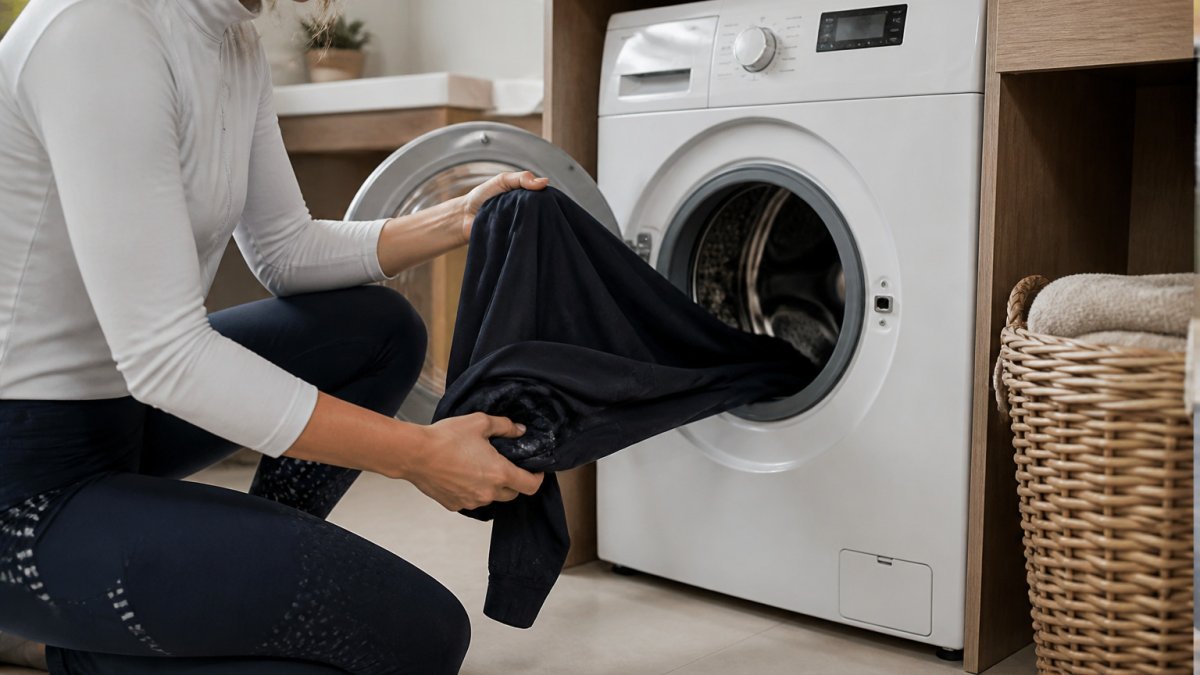
Before washing: prepare the pants
- Brush dry: remove dust, sand, and dry mud with a soft brush (such as a clothes brush). Do this outdoors or over a trash can. Once dry, debris comes off more easily and avoids clogging the machine.
- Treat stains locally: for fresh mud, rinse with cold water without rubbing. For wax or saddle marks, apply a mild stain remover (Marseille soap or glycerin soap) to the area, leave it on for 5 minutes, then rinse.
- Close all fasteners: zippers, buttons, snaps, and hook-and-loop strips. An open zipper can snag the fabric and create irreversible pilling. Turn the pants inside out to protect the exterior.
- Check the pockets: empty them completely. A forgotten ticket can dye the fabric during washing.
During the cycle: the right settings
- Temperature: 30°C maximum, unless the label states otherwise. Hot water loosens elastane fibers and can permanently deform the pants.
- Cycle: delicate or "synthetics" program, with a low-speed spin (400 to 600 rpm). A high-speed spin breaks the fibers and prematurely wears out the fabric.
- Detergent: use a mild liquid detergent, without bleach or fabric softener. Fabric softener clogs technical fibers and reduces breathability and quick drying. A moderate dose is enough: too much detergent leaves residues that attract dirt.
After washing: drying and reshaping
- Gentle spin: if your machine allows it, choose the lowest spin speed. Otherwise, remove the pants as soon as the cycle ends.
- Air-dry: lay them flat or hang them by the waistband, never by the legs, to avoid deforming the fabric. Avoid direct sunlight, which can discolor and weaken the fibers.
- No tumble dryer: the heat of the tumble dryer is the number one enemy of elasticity. It can also damage silicone seat patches and water-repellent treatments. If you absolutely must use it, choose the lowest program and remove the pants while they are still slightly damp.
Washing frequency: do not wash too often
Technical pants do not need to be washed after every session. Wash them every 3 to 5 uses, or sooner if they are visibly dirty or soaked in sweat. Each cycle wears out the fibers a little: spacing out washes extends the life of the pants and preserves their properties.
Here are the key settings and practices to remember for washing technical riding pants:
| Step | What to do | Frequency or setting |
|---|---|---|
| Before washing | Brush off dust and mud | Before every wash |
| Before washing | Close all fasteners and turn the pants inside out | Before every wash |
| During the cycle | Wash on a delicate cycle at 30°C maximum | 30°C unless stated otherwise |
| During the cycle | Spin at a low speed | 400 to 600 rpm |
| During the cycle | Use a mild liquid detergent, without bleach or fabric softener | Moderate dose |
| After washing | Air-dry, hanging by the waistband | Never tumble-dry |
| Frequency | Space out washes | Every 3 to 5 uses |
Caring for silicone seat patches and leather inserts
Silicone seat patches and leather inserts are the most sensitive areas of technical riding pants. Their care directly affects the grip in the saddle and the life of the garment. Yet, many riders treat them like the rest of the fabric, wearing them out prematurely. Here is how to care for each type of seat patch, with appropriate practices.
Silicone seat patches: preserve the grip
Silicone provides grip in the saddle, but it quickly accumulates dust, sweat, and leather residues. Once dirty, it loses its effectiveness and can even become slippery.
After every use:
- Wipe the seat patch with a damp sponge (warm water) and mild soap (Marseille soap or glycerin soap).
- Rinse thoroughly with clean water to remove any soap residue.
- Dry with a clean, lint-free cloth, without rubbing hard.
Absolutely avoid:
- Solvents, alcohol, acetone, and greasy products (oils, balms) that leave a film and reduce grip.
- Bleach, even diluted: it attacks the silicone and makes it brittle.
- Tumble dryers and direct heat sources (radiator, sun) that can crack the silicone.
Frequency: clean the silicone seat patch after every session if the pants were worn for a long time or if the weather was dusty. Otherwise, a weekly cleaning is enough.
Leather inserts: moisturize without soaking
A leather insert requires appropriate care to remain supple.
Regular care:
Alpha Style Competition Leggings | Samshield SS25 →
- Wipe the leather with a damp (not soaked) cloth after every use to remove sweat and dust.
- Let it air-dry, away from any heat source.
- Once or twice a season, apply a leather balm specially designed for soft leathers (such as glove leather). Test it on a small area first.
In case of a stain:
- Blot with a damp cloth, without rubbing.
- For a stubborn stain, use pure glycerin soap, rinse, and dry immediately.
- Never use a regular fabric stain remover on leather.
Avoid:
- Submerging the leather area in water or washing it in the machine with the rest of the pants (if the leather is not removable, follow the label).
- Tumble dryers, ironing directly on the leather, and alcohol- or solvent-based products.
- Food oils and greases that can permanently stain the leather.
Mixed seat patches (silicone + leather): treat each area separately
Some pants combine several types of seat patches. In this case, clean the silicone first (which is more resistant), then the leather with a separate cloth to avoid transferring soap or dirt residues. Use different sponges for each area.
Recommended products for seat patches
- Marseille soap or glycerin soap: mild, without harsh additives, suitable for silicone and leather.
- Soft leather balm: to moisturize leather inserts once or twice a season.
- Microfiber cloth: to wipe without scratching or leaving lint.
Avoid multi-purpose cleaners, alcohol-soaked wipes, and "special leather" products that contain solvents. When in doubt, always test on a small, hidden area.
Removing mud, wax, and sweat stains
Treat the stain immediately before it sets. For mud, let it dry, then brush it off. For wax, a mild stain remover applied to the fabric before washing is usually sufficient.
Sweat marks require a different approach. A lightly applied mixture of water and white vinegar helps eliminate odors. For white pants, spot-treating before washing prevents the stain from becoming ingrained.
A few practical tips:
- Mud: let it dry, then brush off gently
- Wax: mild stain remover, then wash as usual
- Sweat: diluted white vinegar, then rinse
Drying, storage, and preserving elasticity
Drying is often what wears out pants. Lay them flat or hang them by the waistband, never by the legs, to prevent the fabric from becoming misshapen.
Store them in a dry, well-ventilated place. Persistent moisture promotes odors and the growth of mold.
To preserve elasticity over time, limit washing to only when necessary.
Products and practices to avoid to make your pants last longer
Some common practices can quickly damage technical pants. It is better to know them so you can avoid them.
- Using bleach, even diluted
- Tumble drying the pants at high temperatures
- Washing with fabric softeners that clog the fibers
A good rule of thumb: check every product before using it. A leather cleaner or overly harsh detergent can be enough to reduce the lifespan of well-made pants.
Choosing the right pants for easy care at Équitavi
If maintenance is a concern, choosing the right model matters as much as proper care. Pants made with stable fabric and durable finishes require less daily attention.
At Équitavi, we offer, for example, the Samshield SS25 Alpha style competition legging pants, which combine breathable, stretchy fabric with machine washability. For a model with enhanced comfort, the Samshield Alpha Comfort competition pants offer breathable, stretchy technical fabric. If you are undecided between several options, our guide to choosing durable pants helps you compare the criteria that really matter, and our quality-price comparison of technical riding pants shows you where to invest based on your riding style.


Well-chosen and properly maintained pants can last for entire seasons. It is the combination of both that makes the difference over time.
Frequently Asked Questions
How do you machine wash technical riding pants?
Fasten all closures and hook-and-loop fasteners, turn the pants inside out, and place them in a laundry bag. Choose a delicate cycle at 30°C with a mild detergent and no fabric softener. Avoid heavy spinning and let them air dry. These steps protect the stretchy, breathable fabric as well as the anti-pilling finishes.
At what temperature should you wash riding pants?
For most technical pants, a temperature of 30°C is enough to remove sweat and odors without weakening the elastic fibers. Always check the care label: some models can be washed at 40°C, but higher temperatures can reduce the fabric's breathability and elasticity. For white pants, washing at 40°C may sometimes be recommended, but check the manufacturer's instructions first.
Can you tumble dry riding pants?
No, it is best to avoid tumble drying. The heat and drum can alter the elasticity, damage the silicone grip, and reduce the fabric's technical properties. Let the pants dry flat or on a hanger, outdoors, away from direct sunlight. Slow drying preserves the shape, color, and grip of the pants.
How do you remove mud or sweat stains from riding pants?
First, let the mud dry, then remove the particles with a soft brush before washing. For a sweat mark, apply a small amount of glycerin soap or Marseille soap, rub gently with a damp sponge, then rinse with a stream of water. Avoid bleach, which can discolor and weaken the technical fabric.
