

Last updated: November 15, 2026
Quick Summary
There is no single best brand of riding apparel: the right brand is one whose cuts, fabrics, and technical features suit your discipline, body type, and riding frequency. At Équitavi, we select riding apparel based on fabric quality and cut.
- Read the composition: fabric with a real percentage of elastane or technical polyamide will retain its shape longer.
- Seams should be flat in high-friction areas, especially at the knees and under the saddle.
- Pants are the garment that works the hardest: a poor cut fatigues the hips and knees.
- In winter, opt for several thin, breathable layers rather than a single thick layer.
- Always test your gloves with your usual reins before buying.
Table of Contents
- How to evaluate an equestrian apparel brand
- Women's riding outfit: the pieces that make the difference
- Women's riding pants: cut, support, and freedom of movement
- Women's winter riding apparel: warmth without bulk
- Women's riding gloves: grip, size, and breathability
- Comparison of technical pieces for competition
- Choosing your riding outfit at Équitavi
- Frequently Asked Questions
How to evaluate an equestrian apparel brand
There is no universal "best brand" in equestrian sports. The right brand is one whose cuts, fabrics, and level of technicality suit your discipline, body type, and riding frequency. At Équitavi, we select riding apparel based on fabric quality and cut.
The first thing to do is read the composition. Stretch fabric containing a real percentage of elastane or technical polyamide will retain its shape longer than basic cotton blend. The second thing to check is the seams: they should be flat in high-friction areas, especially inside the knees and under the saddle.
The Fédération Française d'Équitation sets the standards for equestrian activities and publishes competition rules, which remain the reference for checking whether an outfit is allowed in competition. We also recommend comparing apparel on three points:
- Fabric density and elasticity: fabric that retains its shape after stretching limits premature wear.
- Reinforcements in pressure areas: knees, seat, and lower legs.
A technical garment is judged by its use, not its label.
Women's riding outfit: the pieces that make the difference
A women's riding outfit is built around three pieces that determine actual comfort in the saddle: pants, jacket, and gloves. The rest—polo, helmet, boots—completes the outfit but has less impact on the feeling of freedom.
Pants come first. They are the garment that works the hardest, rubbing, pulling, and heating up. A rider who rides several times a week will notice immediately: poorly cut pants fatigue the hips and knees long before the end of the session.
The jacket comes next, especially in competition where it must remain elegant without restricting the shoulders. Gloves, finally, are the most underestimated piece. Gloves that are too thick reduce contact with the reins; gloves that are too thin slip and force you to grip tighter.
What distinguishes a good outfit from an average one rarely has to do with design. It has to do with how each piece supports movement without hindering it.
Women's riding pants: cut, support, and freedom of movement
Cut is the primary factor in the comfort of women's riding pants. A high waist with an internal elastic belt keeps the pants in place without compression, while a fitted cut at the thighs and calves prevents folds from rubbing under the saddle.
Support comes from the fabric as much as the cut. Pants that are too loose sag at the seat; pants that are too rigid restrict hip movement. The balance lies in stretch fabric that retains its shape.
Our article on freedom of movement details the areas where the cut must absolutely remain free. In practice, we focus on three points:
- The seat must remain in contact without pulling at the crotch.
- The knee must be able to bend without creating a pocket of fabric.
- The lower leg must stay in place without being tight, so it does not ride up inside the boot.
Good pants are tested by riding a horse, not by standing in front of a mirror. If you are between two sizes, choose the one that allows you to bend your knee without tension.
Women's winter riding apparel: warmth without bulk
In winter, the trap is not the cold: it is excessive layering. Three thick layers restrict movement and cause perspiration, which cools down as soon as the effort decreases. Effective women's winter riding apparel relies on a technical layer close to the body and a windproof outer layer.
Breathability remains the deciding factor. A jacket that retains heat but does not wick away moisture well becomes uncomfortable after twenty minutes of working at a trot. Look for a lightweight lining, breathable panels, and seams that do not interfere with the shoulders.
For the upper body, our guide to warm, breathable riding jackets explains how to balance insulation and breathability depending on the type of session. A competition jacket with padded shoulders, such as the Cavalleria Toscana jersey jacket, is available in our selection.
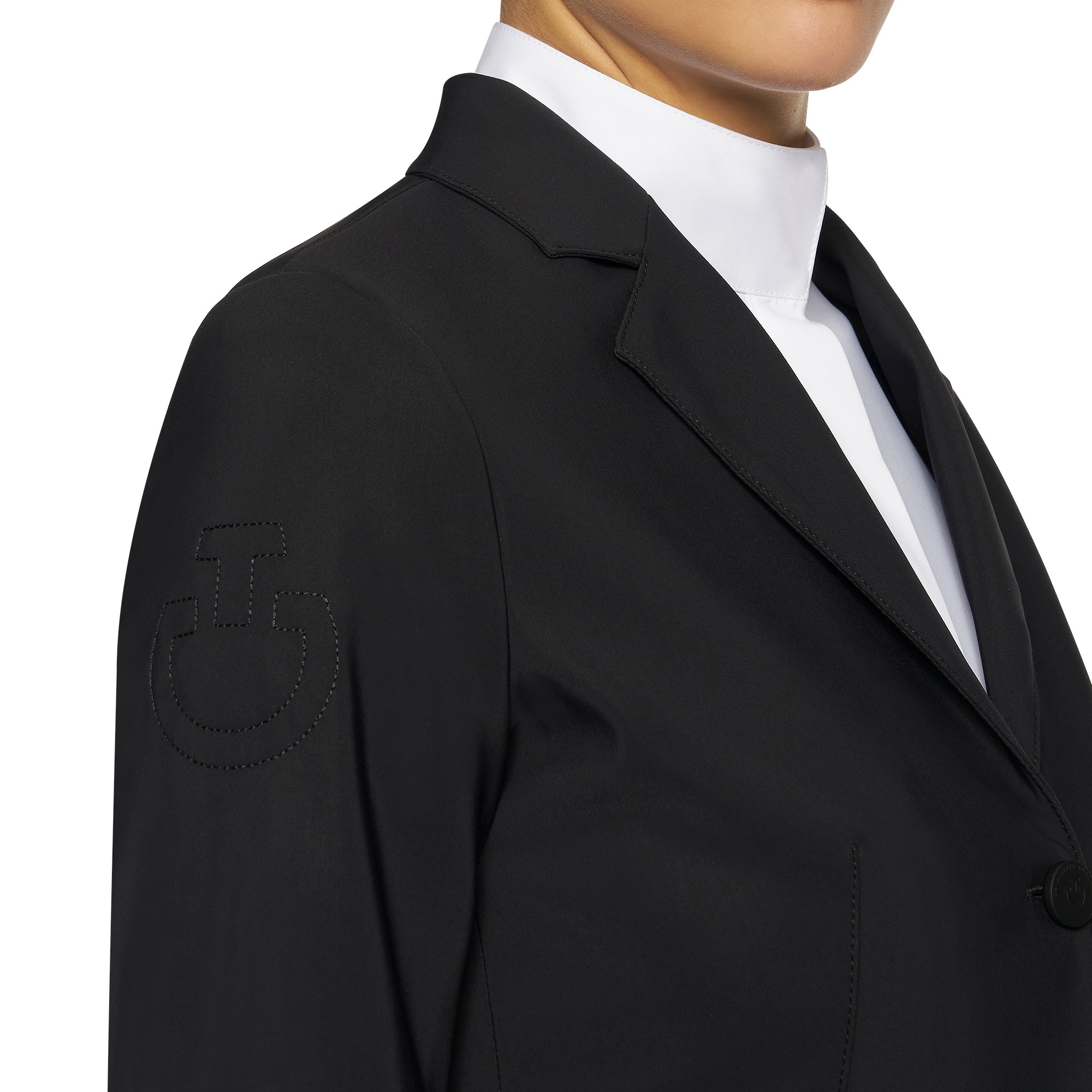
The right winter approach: opt for several thin, breathable layers rather than a single thick layer.
Women's riding gloves: grip, size, and breathability
The grip of a women's riding glove depends on two elements: the palm material and the fit. Gloves with nubs or non-slip reinforcement improve grip on the reins, provided they are properly sized. If too large, they twist; if too small, they constrict and cut off circulation.
Practical sizing guide: measure the hand circumference at the knuckles (without squeezing) and the length from the wrist to the tip of the middle finger. Most brands offer sizes 6 to 10.
Grip and compatibility with reins: non-slip gloves on soft leather reins can become too grippy and hinder fine adjustments. Conversely, smooth gloves on synthetic reins will slip.
Breathability and seasons: breathability matters for long sessions and hot days. Thin leather or technical material gloves with perforated panels wick away perspiration better than fully lined gloves.
Care and lifespan: leather gloves should be cleaned with lukewarm water without detergent, then left to air-dry away from a heat source.
What most guides forget: gloves should be tested with your usual reins, and you must check compatibility with competition attire requirements (color, discretion, absence of visible logos).
Warning: do not choose gloves solely for their appearance. Gloves that are too thick reduce contact with the reins; gloves that are too thin slip and force you to grip tighter. The right gloves are the ones that make you forget you are wearing them.
Comparison of technical pieces for competition
In competition, attire must comply with the discipline's rules while remaining comfortable over time. Here is an overview of a few pieces from our selection.
| Piece | Price | Support | Freedom of movement | Breathability | Durability | Long-term comfort | Ideal use |
|---|---|---|---|---|---|---|---|
| Alpha Samshield Pants | 205.00 | High (stretch fabric that retains its shape) | Very good (legging cut, mesh at the calf) | Very good (UPF 50+, fine mesh) | Good (wrinkle-resistant finish) | Very good (lightweight, quick-drying) | Competition in hot weather, summer events |
| Ash EQUILINE Pants | 289.00 | High (structured fitted cut) | Good (technical fabric) | Average (classic fabric) | Very good (reinforced seams) | Good (support without compression) | Classic competition, dressage, and jumping |
| Sparrow EQUILINE Jacket | 499.00 | Very high (structured jacket) | Average (constructed shoulders) | Average (classic lining) | Very good (fine materials) | Good (formal comfort) | Formal attire events, jumping |
| Cavalleria Toscana Hunter Jacket | 809.00 | Average (stretch jersey) | Very good (lightweight jersey, padded shoulders) | Very good (breathable) | Good (durable jersey) | Very good (lightweight, does not restrict the shoulders) | Hunter and American events |
| Core Aztec Diamond Leggings | 108.00 | Average (high waist, recycled fabric) | Very good (stretch leggings) | Very good (quick-drying) | Average (recycled polyester) | Very good (grip pocket, lightweight) | Daily training, long sessions |
Price
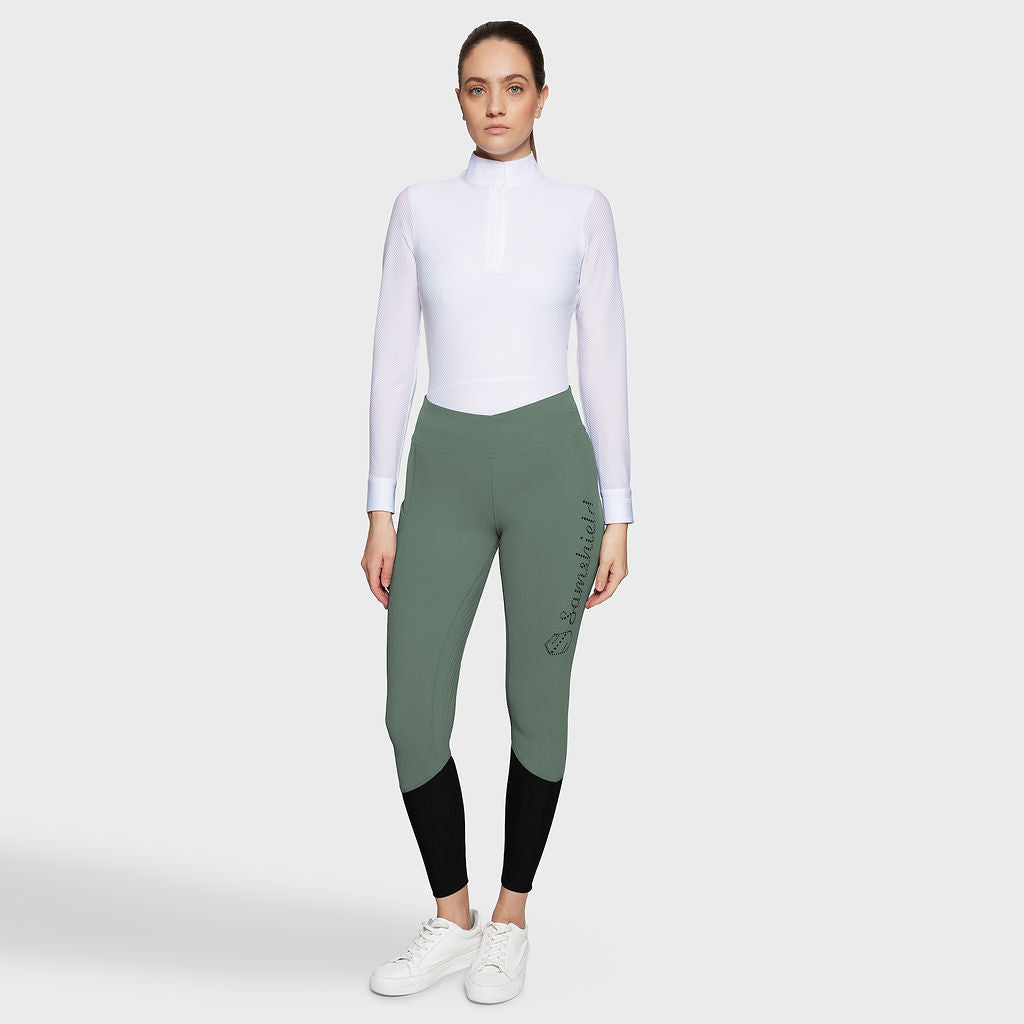
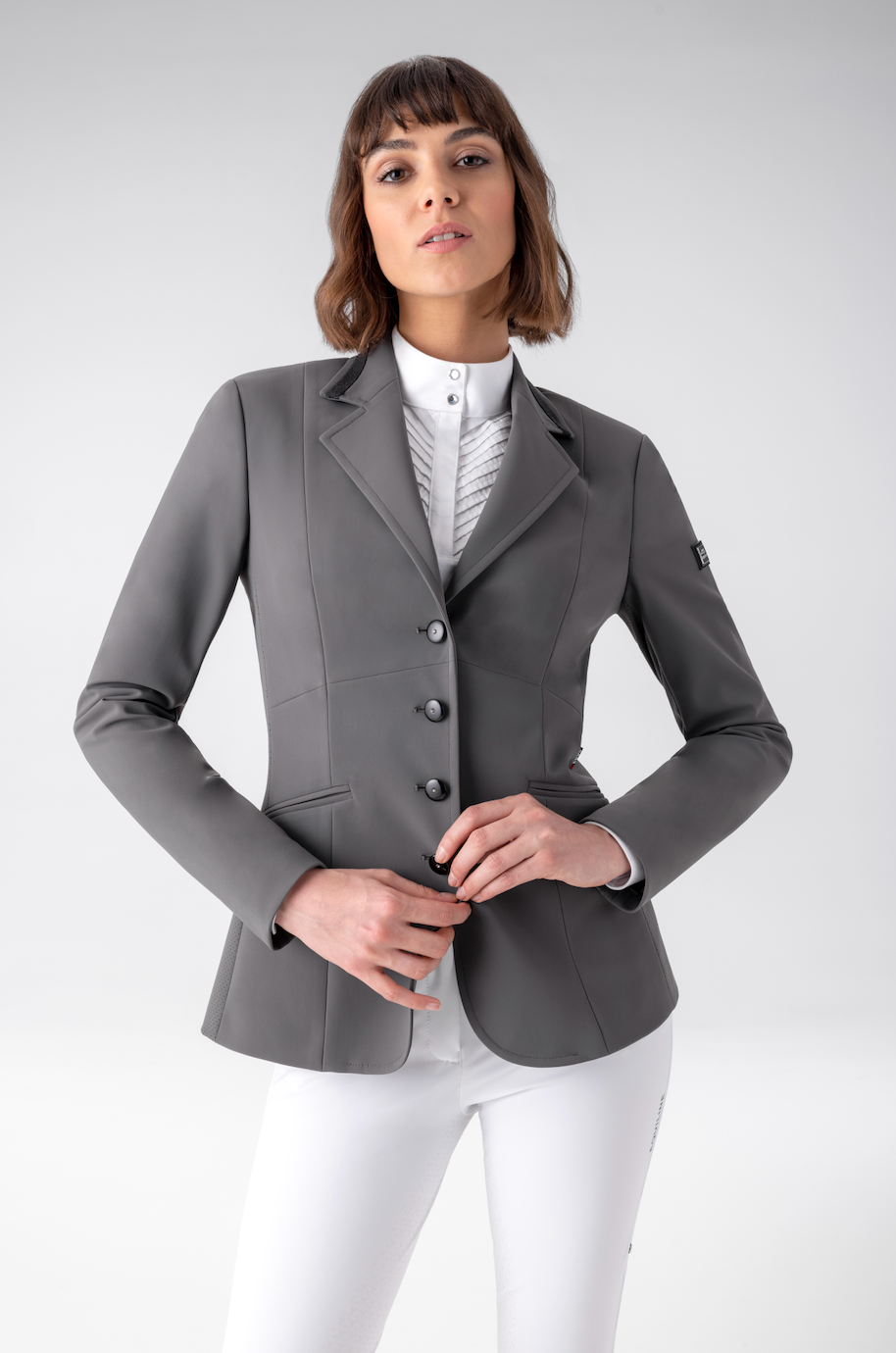
How to read this chart: support and freedom of movement are often in tension.
Rule compliance criteria: before buying, check three points in your discipline's rules (available from the French Equestrian Federation): the permitted color (white, beige, or grey depending on the event), whether a jacket is mandatory, and restrictions on logos or materials.
Our testing protocol: we test each item over at least three training sessions (one dressage session, one jumping session, and one outdoor session) to assess support after sweating, the appearance of creases in high-friction areas, and the feeling of freedom in the shoulders and hips. This protocol remains artisanal, but it helps identify items that become misshapen or chafe after a few hours.
Note: do not rely solely on the size indicated on the label. Two trousers of the same size from two different brands may fit differently; choose brands that publish a detailed size guide and accept free returns.
Choosing Your Riding Outfit at Équitavi
Choosing a riding outfit means choosing a brand whose materials match your actual practice. Our selection at Équitavi is based on high-performance, comfortable fabrics, cuts designed for movement, and a wide range of renowned equestrian brands.
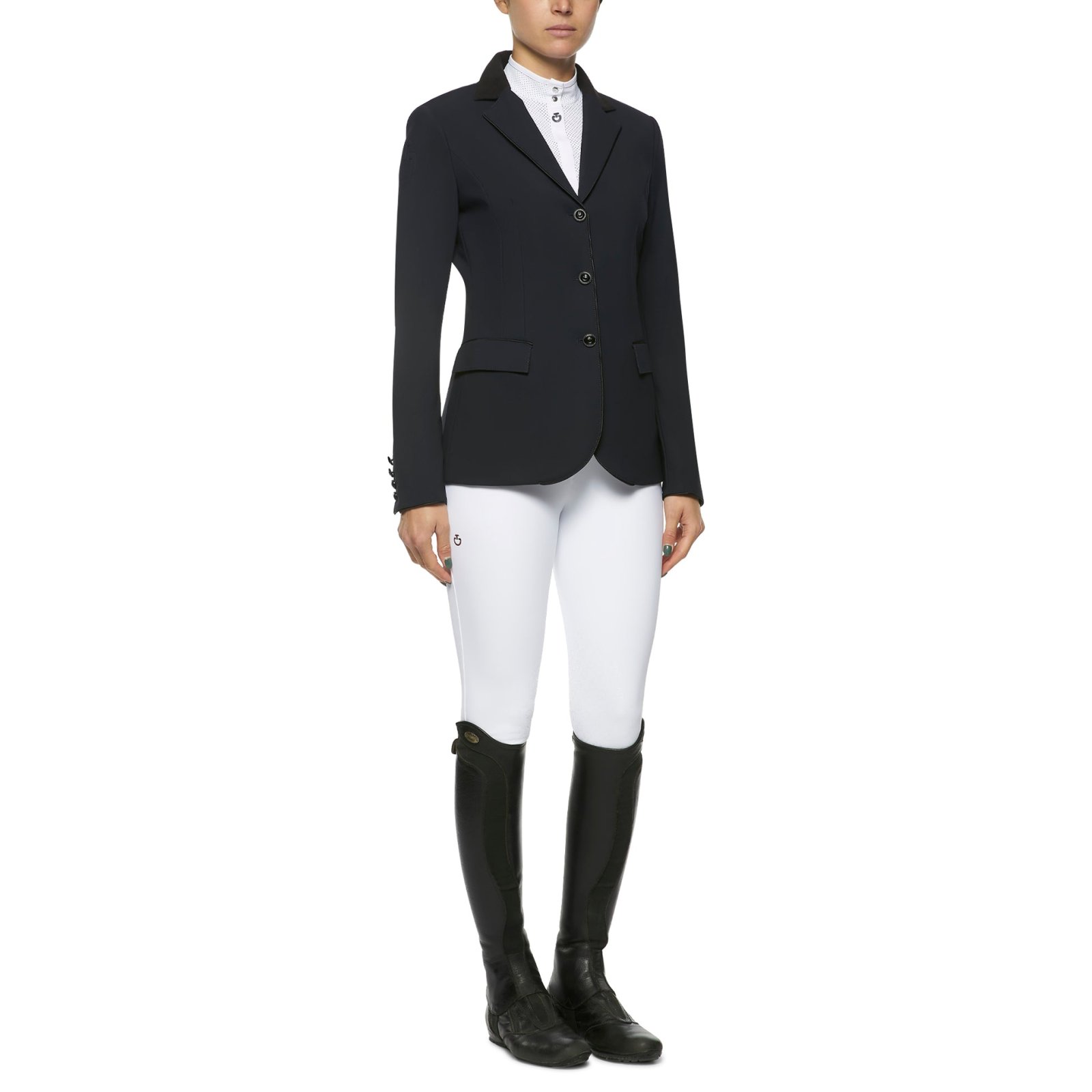
For competition, you can view the EQUILINE Sparrow Show Jacket directly among our available items.
Our approach is based on three commitments: a rigorous selection, high-performance, comfortable fabrics, and cuts genuinely designed for movement. The complete guide to women's riding clothes provides more detailed information on our evaluation criteria if you want to go further before ordering.
The real difficulty is not finding a brand, but finding the one that matches your discipline and body type. Équitavi selects equestrian clothing that combines technical fabrics, cuts adapted to movement and style, for both competition and training. Browse our collection and identify the items that will truly accompany your practice.
Frequently Asked Questions
What criteria should be compared when choosing riding clothes?
First, compare the material (stretch, breathable, quick-drying), the cut (high waist, gussets, freedom in the hips), reinforcements in high-wear areas, and ease of care. Also check compatibility with your discipline: show trousers do not have the same requirements as leisure leggings. Finally, take into account the duration of wear and the seasons to avoid buying several overlapping items.
What material should be preferred for breathable riding clothes?
Choose technical fabrics blending polyester and elastane, such as the 78% recycled polyester and 22% elastane of the Aztec Diamond Core leggings. The fine mesh on the calf, found on the Samshield Alpha trousers, provides breathability where the leg heats up the most. Avoid pure cotton for exercise: it retains moisture and dries slowly.
How to choose comfortable riding trousers?
Look for a high waist with an internal elastic belt to prevent the trousers from slipping down, flat seams, and a fabric that stretches in both directions. The Samshield Alpha trousers combine breathable fabric, a phone pocket, and a pilling-resistant finish, which limits adjustments while in the saddle. Always try them on while seated: that is when seams and support are revealed.
What riding outfit should be chosen for winter riding?
Layer a breathable base, a thin insulating layer, and a windproof jacket. For the legs, lined women's riding trousers or thick leggings under show trousers work well. For the hands, thin, warm gloves with grip on the reins are essential: dexterity matters more than thickness. Check that the layers remain fitted so as not to interfere with grip.
How to care for riding clothes?
Wash technical items inside out, cold or at 30°C, without fabric softener, which clogs breathable fibers. Hang to dry rather than putting them in the dryer, and iron cold on the reverse side if necessary. For the Aztec Diamond Core leggings, the brand specifies avoiding any direct heat source and washing carefully because of the delicate edges. Regular care extends the lifespan and preserves grip.
