

Last updated: October 25, 2026
Quick Summary
For a warm and breathable women's riding jacket, choose one whose insulation is combined with water-repellent fabric and ventilation openings, such as a mesh panel in the back or underarm vents. The Core Aztec Diamond Jacket is the most breathable for exercise, while the Sierra Samshield Puffer keeps you warm down to the thighs while waiting at competitions.
- The Dupont™ Sorona® synthetic padding retains warm air while remaining lightweight.
- The Core Aztec Diamond Jacket combines a mesh panel in the back and underarm vents.
- The Courchevel Light Puffer uses 200 g plant-based Sorona® padding.
- The three-layer system remains the most reliable method for riding in winter.
- Fabric softener clogs the pores of breathable fabrics and destroys their moisture-wicking ability.
Table of Contents
- Warmth and breathability: the duo that changes everything when riding
- Comparison of warm and breathable women's riding jackets
- How to dress for riding in winter
- Women's riding softshell jacket: the middle layer
- Women's waterproof riding jacket: what really protects
- Women's riding fleece jacket: the first layer not to neglect
- Fit in riding position and care for technical fabrics
- Put together your Équitavi outfit for the cold season
- Frequently Asked Questions
Warmth and breathability: the duo that changes everything when riding
A warm and breathable women's riding jacket addresses a contradiction every rider knows: you get cold when stationary, and you overheat at a trot.
A riding jacket is not a suitable city coat. It is a technical garment designed to retain heat without trapping sweat. A very warm but non-breathable puffer will soak you from the inside out in twenty minutes of training.
The compromise comes down to three elements: the type of insulation, the moisture-wicking capacity, and the cut. A warm and breathable women's riding jacket combines these three parameters according to your actual activity, not according to the temperature displayed on your phone.
Warmth and thermal insulation
Useful warmth when riding comes from insulation, not thickness. Well-structured synthetic padding like Dupont™ Sorona® retains warm air while remaining lightweight.
What most guides forget: insulation loses its effectiveness if moisture accumulates inside. A quilted jacket without air ventilation becomes a greenhouse. Therefore, look for a winter jacket whose insulation is combined with a water-repellent outer fabric and ventilation openings.
Breathability and moisture wicking
Breathability refers to a fabric's ability to allow water vapor produced by your body to pass through. A breathable fabric wicks moisture away from the body instead of condensing it against your skin.
In practical terms, three signs distinguish a truly breathable jacket from one that claims to be on its label:
- A mesh panel in the back, which allows accumulated heat under the collar to escape
- Laser-cut ventilation openings under the arms
- A midweight fabric that covers without creating a stuffy layer
A competition jacket or sleeveless riding vest may be enough if your session alternates intense exercise and short breaks. For long waits at competitions, it is the opposite: prioritize warmth and accept less breathability, even if it means removing a layer during warm-up.
Comparison of warm and breathable women's riding jackets
Here is our selection, ranked by actual use rather than price. Each model meets different weather conditions and exercise intensities.
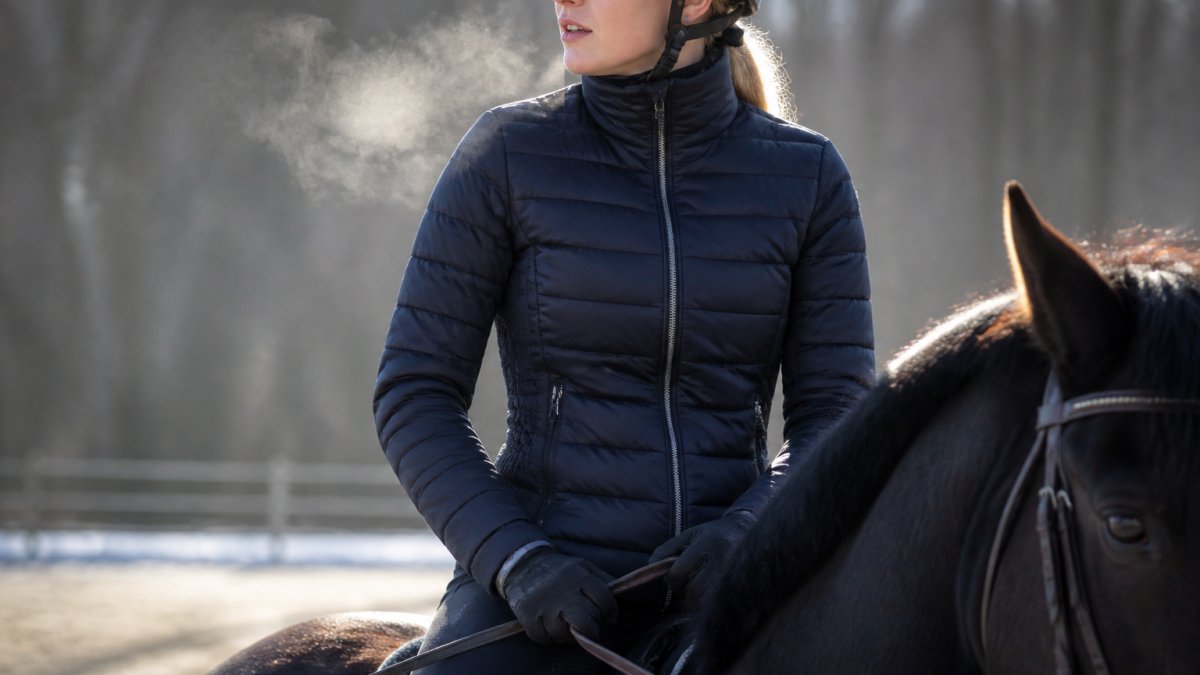
| Model | Price | Type | Key feature | Ideal for |
|---|---|---|---|---|
| Core Aztec Diamond Jacket | $159.00 | Technical jacket | Back ventilation and underarm vents | Intense exercise, mid-season |
| Wanda Samshield Jacket | $317.00 | Softshell | Windproof and breathable TPU membrane | Uncertain weather, everyday use |
| Lizy Samshield Jacket | $468.00 | Insulated waterproof | Waterproof with plant-based insulation | Cold rain, training |
| Courchevel Light Puffer | $431.00 | Mid-season puffer | 200 g Sorona® padding | Light warmth, mobility |
| Sierra Samshield Puffer | $534.00 | Long parka | Warmth down to the thighs | Waiting at competitions |
Core Aztec Diamond Jacket: the most breathable for exercise
For a sustained workout, it is our first choice.
The sculpted 3D pattern provides a precise fit without restricting the shoulders, and the thumbholes with fold-down gloves protect the hands at the mounting block.
Where it reaches its limits: in extreme cold and when stationary, it is not enough on its own.
Ideal for: active female riders who sweat during exercise and are looking for a breathable women's jacket. Avoid if: you mainly ride outdoors in freezing weather.
View the Core Aztec Diamond jacket product page
Wanda Samshield Jacket: the versatile softshell
A softshell is the most versatile compromise for days when the weather is uncertain.
The removable hood with an internal magnet and zippered closures make it easy to use every day.
Its limitation lies in its moderate insulation. In sub-zero temperatures and strong winds, it requires an insulating layer underneath.
Ideal for: female riders who want a single jacket for everyday use and outings in uncertain weather. Avoid if: you are looking for protection from heavy rain.
View the details of the Wanda Samshield jacket

Lizy Samshield Jacket: the insulated waterproof for rain
Rain is the real test of a women's waterproof riding jacket.
The short cut is a deliberate choice: it frees the hips in the saddle and avoids the effect of fabric bunching up behind the saddle.
The compromise: less warmth on the thighs than a puffer, so it is best reserved for active sessions rather than long waits.
Ideal for: outings and training in cold rain. Avoid if: you spend hours stationary at competitions in dry and cold weather.
View the Lizy insulated rain jacket

Courchevel Light Puffer and Sierra: warmth without the weight
Two approaches to lightweight warmth. The Courchevel Light is a mid-season puffer with 200 g plant-based Dupont™ Sorona® padding and 100% recycled polyester fabric. The chevron panels sculpt the silhouette without adding unnecessary volume.
The Sierra takes it further: it is a long parka that reaches the thighs, with the same plant-based padding.
The Sierra is ideal if you stay in the saddle for a long time waiting your turn.
“Puffer” Expresso Winter Jacket | AZTEC DIAMOND FW26 →
Ideal for: the Sierra for competitions and prolonged waits, the Courchevel Light for active mid-season. Avoid if: you are looking for a breathable jacket for intense exercise.
Compare the Courchevel Light Puffer

How to dress for riding in winter
The answer lies in three layers, not a miracle jacket. The layering system remains the most reliable method to stay dry and warm without overheating.
The first layer wicks moisture away from the skin. A thin women's riding fleece or technical base layer serves this purpose.
The second layer insulates. A softshell or sleeveless bodywarmer type vest provides warmth while leaving the arms free.
The third layer protects from wind and rain. This is where a windproof or waterproof jacket comes in.
The classic mistake: piling up three thick layers. You will be warm at the mounting block and overheat after ten minutes of trotting. It is better to have one extra thin layer, which you remove and put back on depending on the exercise.
| Conditions | Recommended layers |
|---|---|
| 5 to 10 °C, dry | Thin fleece + breathable jacket |
| 0 to 5 °C, windy | Fleece + windproof softshell |
| 0 to 5 °C, rainy | Fleece + insulated waterproof |
| Below 0 °C, long wait | Fleece + long puffer jacket |
Women's softshell riding jacket: the mid-layer
Softshell is the most underrated piece of equestrian equipment. It combines stretch, water resistance, and breathability, making it the ideal layer between fleece and a raincoat.
Its advantage while riding lies in its stretch.
The key consideration: not all softshells are created equal. A quality membrane blocks the wind without trapping moisture.
Women's waterproof riding jacket: what really protects
Water resistance can be measured, not guessed. A serious women's waterproof riding jacket features taped or waterproof seams, a treated zipper, and fabric that does not let water through under pressure.
Three details make the difference in the saddle:
- Taped seams, because standard seams are the primary entry point for water
- A high collar, which prevents rain from running down your neck
- A removable hood, useful on foot but cumbersome under a helmet
Be careful with the word "water-resistant". Water-resistant fabric repels light rain but is not waterproof. If you are riding in a steady downpour, look for true waterproofing, not just a surface treatment.
Women's fleece riding jacket: the first layer not to be overlooked
Fleece is the layer that works in contact with the skin, and it is often the one we choose the least carefully.
Opt for a midweight fleece with a high collar and a full-length zipper to regulate warmth.
A useful tip: if you are cold in fleece alone while standing still, that is normal. This layer is not designed to insulate on its own, but to wick moisture and complement other layers.
Fit in riding position and care for technical fabrics
A jacket that fits well while standing can be uncomfortable in the saddle. The fit in riding position is the test that most store fittings overlook.
In the saddle, three areas must remain free: the shoulders, the elbow joint, and the lower back. A fitted cut should follow these movements without riding up. If the jacket rides up when you raise your arms to adjust your reins, it is too short or too stiff.
Regarding care, technical fabrics should be washed at low temperatures without fabric softener. Fabric softener clogs the pores of breathable fabrics and destroys their moisture-wicking ability.
Warning: washing a waterproof jacket with fabric softener will ruin its water resistance in a single cycle, and the fabric will start absorbing water instead of repelling it.
Putting together your Équitavi outfit for the cold season
At Équitavi, our selection is based on a simple idea: each layer must serve a specific function, without duplication. We prioritize technical fabrics and cuts designed for movement, because that is where real comfort while riding comes from.
To put together a winter outfit, we recommend:
- First, choose the outer layer based on the prevailing weather
- Add an insulating layer depending on the intensity of your activity
- Finish with a breathable base layer, never cotton
Frequently Asked Questions
What material should I choose for a warm, breathable riding jacket?
Look for an outer fabric that blocks the wind while allowing moisture vapor to escape, such as a membrane softshell, paired with insulating fill. The Dupont Sorona fill used in several Samshield models provides warmth without added weight. Avoid non-breathable plastic linings: they trap perspiration and cool down as soon as you slow down. A high collar and taped seams complete the protection without compromising ventilation.
How should I dress for winter riding without getting cold or sweaty?
Dress in three layers: a fleece or technical base layer close to the skin to wick away moisture, a women's softshell riding jacket to block the wind, and then an insulated puffer jacket or raincoat depending on the weather. Remove the outer layer as soon as your activity level increases, then put it back on during breaks. It is layering, rather than the thickness of a single piece, that keeps the body dry and warm.
Can a women's waterproof riding jacket still be breathable?
Yes, provided the membrane is suitable. A TPU membrane, like the one on the Wanda coat, blocks the wind and repels water while allowing vapor to escape. Taped seams and waterproof zippers prevent leaks at weak points. However, a basic waterproof jacket without a breathable membrane will quickly become damp from the inside during a strenuous workout.
How can I check that a riding jacket does not restrict freedom of movement?
Test the fit in riding position, not while standing: raise your arms as if holding the reins and lean forward. A fitted cut with ribbed stretch panels, like on the Core Aztec Diamond jacket, follows the movement without pulling at the shoulders. Sleeves with thumbholes and fold-over mitts also protect the wrists. If the jacket rides up or gape at the back, it is too short or too stiff.
How do I care for a technical riding jacket so it lasts?
Wash at a low temperature with a mild detergent, without fabric softener, which clogs the pores of breathable fabrics. Zip up the zippers and remove the detachable hood before washing. Air dry rather than tumble dry, unless otherwise indicated, and reactivate the water-repellent treatment with a specific product when water no longer beads up. Regular care preserves breathability and insulation longer than infrequent intensive washing.
Riding comfortably in winter requires choosing your layers based on the actual effort, not the temperature on the thermometer. Équitavi brings together renowned equestrian brands and technical fabrics that make this layering effective, with cuts designed for movement in the saddle and guidance to help you find the right size. Browse our collection and put together an outfit that supports you whether you are working out or standing still.
