

Table of Contents
- Why consider an alternative to the classic competition jacket
- Equestrian competition dress code: what is actually required
- The technical competition jacket: comfort and freedom of movement
- The competition shirt without a jacket: the elegant and lightweight option
- Comparison table: which alternative fits your budget
- Hybrid alternatives and climatic adaptation
- Which alternative to choose for your rider profile
- Frequently Asked Questions
Last update: October 9, 2026
Why consider an alternative to the classic competition jacket
The classic competition jacket is no longer the only credible option in the field.

The problem with the traditional jacket comes down to three things: weight, heat, and restriction. A jacket made of stiff fabric restricts the shoulders and bust, exactly where a rider needs range of motion.
This guide compares truly compliant alternatives, their prices, and the profiles they suit best.
Equestrian competition dress code: what is actually required
The equestrian competition dress code requires appropriate and sober attire, but it leaves a margin that many riders ignore. In both official and club competitions, the requirement is about general elegance and proper dress, not a single specific jacket model. The difficulty arises from the fact that the rules vary depending on the discipline, the level, and the federation. Here is how to decipher the actual requirements.
The three levels of requirements
Club and amateur competitions: Most national federations require sober attire, a closed collar, and long or short sleeves depending on the season.
Regional official competitions: A jacket often becomes mandatory, but allowances exist for extreme heat.
International competitions (FEI): FEI regulations are stricter. Short sleeves are permitted in dressage and show jumping, but not in eventing, where a cross-country vest is mandatory for the cross-country phase.

What is actually checked
Officials rarely check the brand or fabric of the jacket. What they check:
- Cleanliness and general condition (no tears, no visible stains)
- Sober color (no neon, no flashy patterns)
- Closed collar and tie or stand-up collar depending on the level
- Absence of unauthorized advertising (sponsor logos are strictly regulated)
A technical, stretchy jacket passes inspection without issue if it meets these criteria. Nowhere does the rulebook state that a jacket must be made of wool or stiff fabric.
Climatic allowances
More and more federations are introducing extreme heat clauses. Above a certain threshold (often 30°C), the jacket may be removed in the ring, but a competition shirt remains mandatory. Check with your national federation before the summer season: these rules change from year to year.
For official competitions, the International Federation for Equestrian Sports publishes updated disciplinary regulations. For club and amateur events, consult your national federation.
The technical competition jacket: comfort and freedom of movement
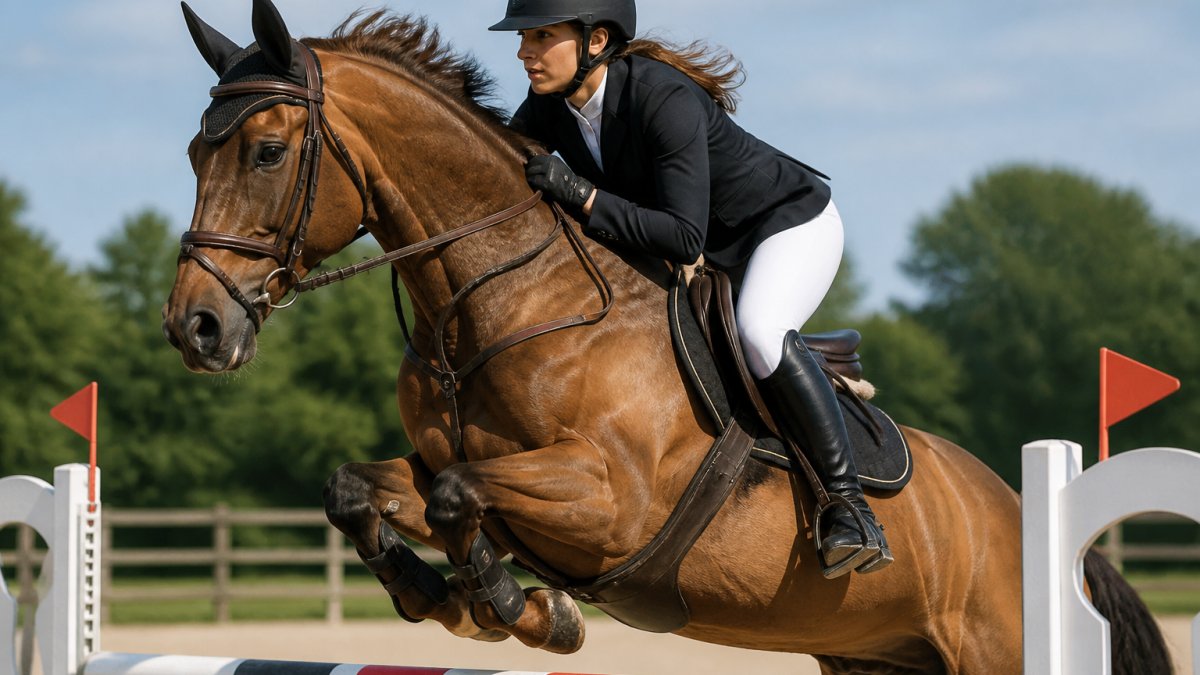
The technical competition jacket replaces stiff fabric with a stretchy and breathable textile. It maintains the tailored cut and collar, but removes the constraint that restricts the shoulders. The result: an elongated silhouette without a feeling of being in a vice.
Aztec Diamond Core fitted jacket: the sculpting cut
The Aztec Diamond Core fitted jacket is our reference for freedom of movement. It is made from recycled fabric and features a mesh back panel for ventilation, laser-cut ventilation openings under the arms, and a 3D sculpted pattern for a precise fit. Integrated thumb loops and fold-over gloves on the sleeves protect the hands during paddock-to-stable transitions.
What sets it apart: the medium-weight fabric provides coverage without transparency, while wicking away moisture and drying quickly. It is the compromise that classic jackets do not offer.
Samshield Evelya training top: paddock-to-stable versatility
The Samshield Evelya training top plays a different card: the zippered training jacket that works everywhere. Four-way stretch, UPF 50+ protection, quick-drying, and black chrome details. At $249.00, it targets the rider who moves from warm-up to relaxation to ring work without changing attire.
Its limit: it is not a competition jacket per se. It excels in training and transition, not in an official competition ring.
The competition shirt without a jacket: the elegant and lightweight option
The competition shirt without a jacket is the most direct solution for hot days. It replaces the jacket-plus-shirt layering with a single technical, breathable, and neat garment. The collar remains impeccable, the silhouette remains elegant, but the rider gains in lightness.
Cavalleria Toscana shirts: breathability and refined finishes
Cavalleria Toscana perforated short-sleeve shirts are designed in stretch technical jersey with laser-cut inserts. The white jersey or poplin collar and hidden button placket maintain the formal look required in competition.
Three options depending on budget:
Competition Sweater | AZTEC DIAMOND →
- FW25 perforated short-sleeve jersey at $205.00: stretch jersey, laser inserts, embroidered logo on the collar
- SS26 perforated short-sleeve at $230.00: lightweight technical fabric, perforated jersey, invisible zipper
- SS26 Stripe Jersey at $277.00: horizontal stripe jersey, poplin collar with hidden snap buttons
Samshield Bella shirt: lightweight for hot days
The Samshield Bella sleeveless training shirt at $185.00 takes the logic further: second-skin fit, no sleeves, and a discreet collar for maximum breathability. The Italian technical fabric ensures quick drying and durable stretch, with the Samshield Swarovski Crystal crest on the chest.
It is the competition shirt without a jacket most suited to extreme heat. However, the lack of sleeves restricts it to disciplines and levels that allow it: check your rulebook.
Comparison table: which alternative fits your budget
| Alternative | Price | Type | Ideal for |
|---|---|---|---|
| Aztec Diamond Core fitted jacket | $129.00 | Technical jacket | Freedom of movement in the ring |
| Aztec Diamond Core FW26 fitted jacket | $159.00 | Technical jacket | Enhanced protection and ventilation |
| Samshield Evelya training top | $249.00 | Training jacket | Training and transitions |
| Cavalleria Toscana FW25 perforated jersey shirt | $205.00 | Competition shirt | Elegant and breathable competition |
| Cavalleria Toscana SS26 perforated shirt | $230.00 | Competition shirt | Hot days, formal look |
| Cavalleria Toscana SS26 Stripe Jersey shirt | $277.00 | Competition shirt | High-end finishes |
| Samshield Bella shirt | $185.00 | Sleeveless shirt | Extreme heat, training |
| Aztec Diamond competition sweater | $82.00 | Sweater | Layering under a competition jacket |
| Aztec Diamond Core short-sleeve base layer | $98.00 | Base layer | UV 40+ protection, quick-drying |
The table shows one thing: entry-level technical gear starts much lower than one might think. The Equitavi Sports sunshirt at $46.00 and the Aztec Diamond show shirt at $82.00 cover training needs without sacrificing technical performance.

To compare fabrics and cuts based on your discipline, consult the FEI technical documentation on rider equipment.
Hybrid alternatives and climate adaptation
Hybrid alternatives blur the line between show jackets and training wear. A V-neck show shirt can be worn under a competition jacket, or on its own when the heat rises. It is the most versatile piece in your wardrobe. However, climate adaptation really changes the choice, and that is where classic guides fall short.
High heat: above 28°C
Priority is given to breathability and quick drying. Perforated short-sleeve shirts from Cavalleria Toscana (technical jersey with laser-cut panels) wick away heat without sticking to the skin.
One point often overlooked: dark fabrics absorb heat. In summer, prefer light shades (pearl grey, beige, off-white) that reflect the sun. Technical jackets with a mesh back panel, such as the Core Aztec Diamond fitted jacket at $129.00, remain wearable up to approximately 30°C if regulations require it.
Cold and rain: below 10°C
A classic wool jacket does not protect against rain. A technical jacket with a water-repellent treatment and a mesh panel remains more effective. The Core Aztec Diamond base layer at $98.00, with UV 40+ protection and laser-cut vents, can be worn under a light jacket to add an insulating layer without bulk. For winter shows, layer a technical base layer, a show shirt, and a water-repellent jacket.
Mid-season: between 10°C and 20°C
This is the simplest configuration: a long or short-sleeve show shirt under a light jacket. The Evelya Samshield training top at $249.00, with four-way stretch and UPF 50+ protection, is suitable for warm-ups and transitions, but not for the official arena.
The case of multi-class shows
When you have several classes in the same day, the temperature can vary from 10°C in the morning to 28°C in the afternoon. The solution: a technical moisture-wicking base layer, a breathable show shirt, and a light jacket that you can take off between classes. The Equitavi Sports sunshirt at $46.00 fulfills this role as a budget-friendly base layer.
Which alternative should you choose for your rider profile
The right choice depends on three criteria: your discipline, your budget, and your body type. Here is how to decide.
For show jumping or dressage competition: a technical show shirt remains the safest bet.
For daily training: a training top or show shirt is sufficient. No need to invest in a competition jacket for arena sessions.
For young riders and beginners: prioritize durability and comfort.
Frequently Asked Questions
Can you wear something other than a show jacket in official competitions?
It depends on the level and the applicable federal regulations. In club and amateur shows, dress codes are often relaxed, and a neat show shirt may be sufficient. In official competitions, a jacket is generally expected, but lighter technical models are accepted. Always check the specific rules of your competition before entering the arena.
Are technical show jackets more comfortable than classic models?
Yes, in most cases. A technical show jacket uses stretchy and breathable fabrics that follow the body's movements, unlike the rigid fabrics of classic jackets. This elasticity improves freedom of movement and reduces the feeling of restriction, which is particularly useful for show jumping and dressage where range of motion is important.
How can you modernize your show outfit while complying with regulations?
Opt for technical fabrics with fitted cuts that elongate the silhouette, while respecting approved colors. A show shirt worn without a jacket, featuring a neat collar and a hunting tie, remains compliant in many shows. Prioritize pieces with subtle and elegant finishes rather than overly casual cuts.
What are the alternatives for riders seeking more freedom of movement?
Show shirts made of stretchy technical jersey and fitted softshell jackets offer superior elasticity. For hot days, a sleeveless shirt with a subtle collar improves breathability. These alternatives maintain a professional appearance while reducing movement restrictions during exertion.